High Valley Historically Significant

Old-Growth-2.jpg High-Valley-School-Districts-1.png High-Valley-Token-0.jpg

I met Al last year, after responding to a local notice of hay for-sale. I was reseeding my lawn and looking for cover. Al, in his immense kindness and generosity, had allowed a local farmer to store and sell hay out of his High Valley barn. While retrieving my bundles, I shared with the farmer that I recently moved to the area to start a farm and education center. Noting the similarities in Al’s and my ambitions, introductions were made. Al’s shine was apparent from the outset compelling me to pursue our shared goals with him, though I didn’t get to know him as well as I did his High Valley landscape, regrettably.

Our conversations explored possibilities primarily questioning if 2Attara could partner with 9 Partners (my farm project). We talked throughout the year rolling occasionally into what was going on in Brooklyn. I was curious to hear about his work and friends there. I learned he had collected a host of accomplished, creative, admiring attendants here and there, which endeared me further to him and subsequently them (y’all) vicariously.

One friend noted, within this thread, that, at least ten years earlier, Al was troubled over being able to continue his propensity to provide and collect. He was considering 9 Partners, in part, because he felt some insecurity over the property not generating revenue. Tax bills were substantial and could be mitigated with agriculture income.

Al’s vision for his things and his people found an appropriate home upstate. High Valley is a property of historical though perhaps underappreciated significance to the Clinton community. Immediately prior to Al, High Valley was a sanctuary for many. The Youtube link below share’s a bit of that story. Before those loving folks’ occupation, the property served education entrepreneur, Olga Smythe, who started and ran a school and horse ranch for decades there. Children and young adults who didn’t fit with the Poughkeepsie public school system joined.

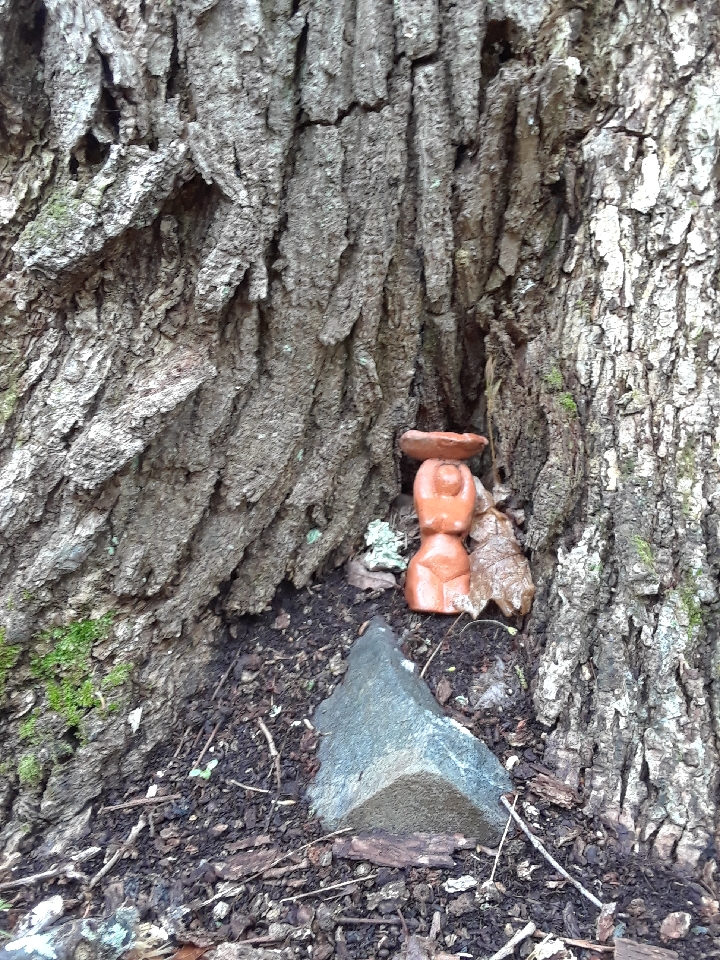
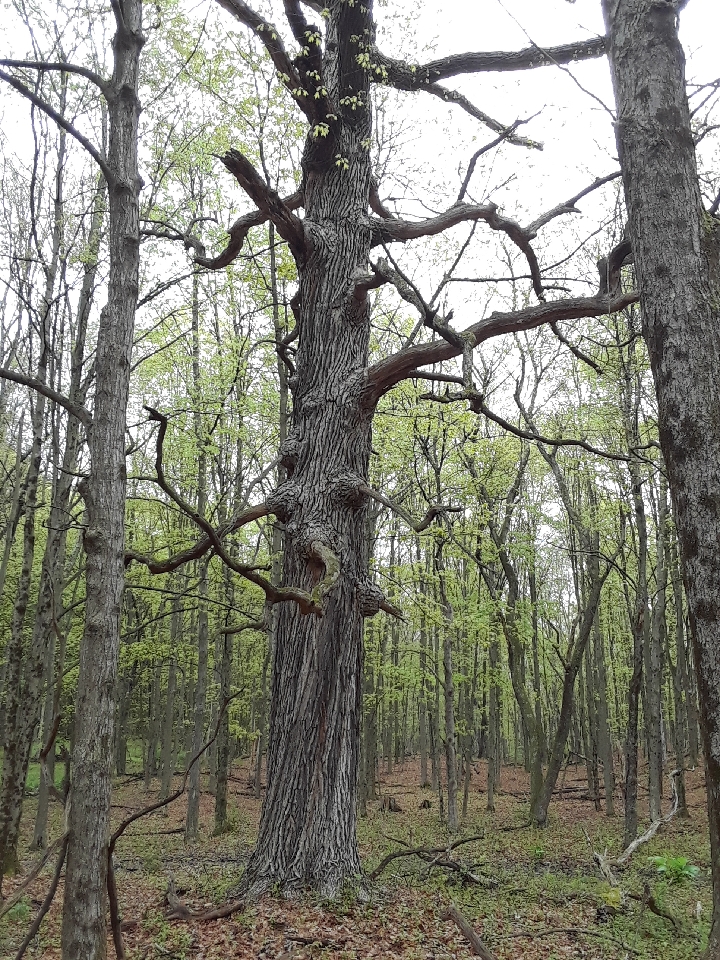
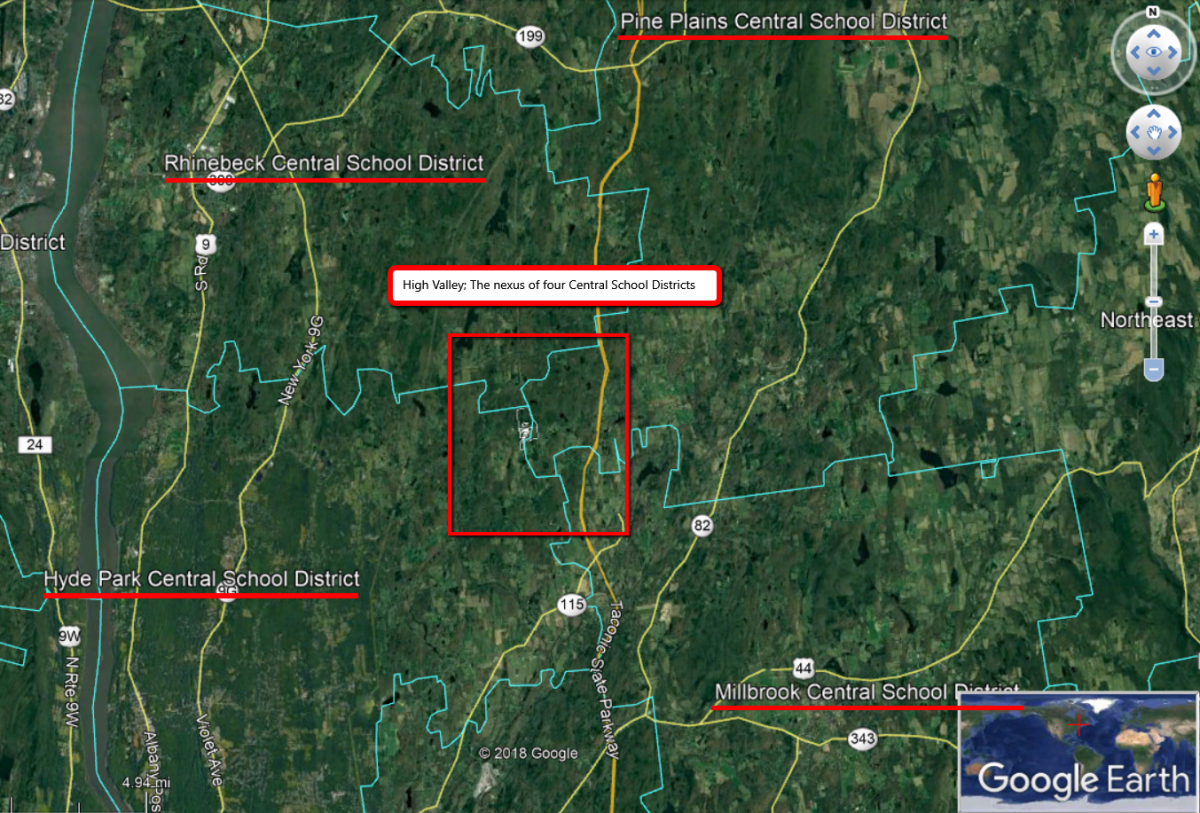
High Valley is also interestingly the geographical nexus to four public school zones. This could explain Al’s property tax woe, in part. see image. The token, reminiscent of a past visitor rests at the foot of a fourteen-foot diameter, old-growth, giant north of the pond. This tree reminds me of Al.

I hope you enjoy these images and links. I know Al did.
The High Valley Center, Clinton Corners, NY- Last Gathering

Olga’s School
From Childhood to Adulthood: A Visit from Stanley

Al’s Legacy

Here’s something I posted on Facebook about a week after Al passed. Found a nice clip of the birds chirping up at Al’s pond upstate but I can’t upload it here (but it’s there on my Facebook if you want to go there)

We recently lost a friend dear to local entrepreneurs, Brooklyn and the planet. Al Attara was a fixture within and supporter of many around his buildings at 33 Flatbush Ave and 139 Atlantic Ave, and other communities from Bay Ridge to Dutchess County.

He was iconic to me not for his values and passions- support for the arts and local business, the stories and beautiful things of the past, nature and protecting earth for future generations – but for his rare character that gave seemingly every waking minute towards these values and allowed so many others to make a go of their passion, many of them turning out to be quite successful thanks to his support.

He couldn’t let go of many physical relics from the past – the streets, buildings and things he kept close to his heart in Brooklyn. He never stopped moving, rearranging his buildings full of furniture, tools, trinkets, antiques, junk, who knows what. But he kept it all, because somebody else might need it in the future, for the good of a community. The noble packrat. A performance may need this odd painted panel for a set. A startup business may need this old desk, a monster piece of kitchen equipment, this storefront or this “office” space.. A community meal may need these thousands of plates, forks and cups. Somebody may need a place to sleep. And all that happened. So many of his resources helped me and many others at some point or another. His spaces were (and are) full of people passionate about sustainability. building communities, starting businesses or just somebody looking for some help or some favor that Al was happy to provide.

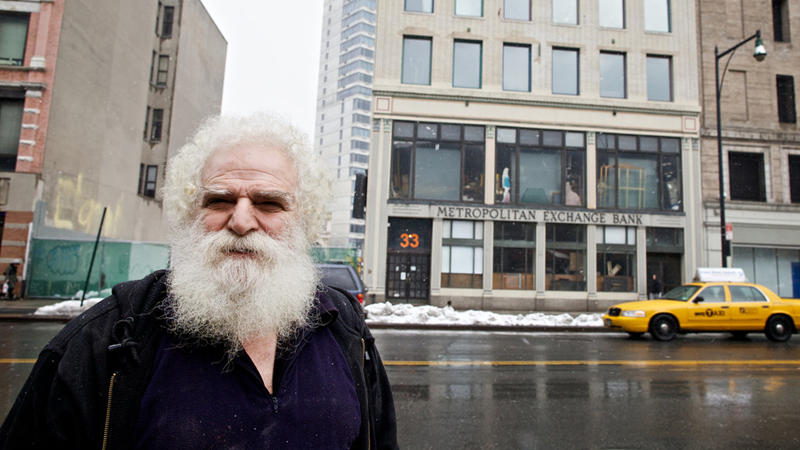
In 33 Flatbush (on a strip that long felt like a crummy traffic extension of the Manhattan Bridge, now surrounded by highrises, an Apple Store and Whole Foods), Al allowed what seemed like anybody to do anything. He really trusted people. I started my business there (a coffee business, using 33 for storage, office and a launch pad to and from flea markets), and countless others used it for wholesale baking, a media studio, writers workshops, nonprofit organizing, sustainable architecture, or a CSA from an upstate farm. Companies like mine, or Madecasse Chocolate, Sea to Table and Gimlet Media spent their early years here. Others were builders, architects, filmmakers, beekeepers and scientists.

Many of us paid rent, but many others didn’t, or came to whatever arrangement Al thought could suffice. This was the early and mid 2000s, before WeWork shared office spaces and before sustainability became the thing.

Al always said he wanted to leave a legacy that supported the natural environment and the arts. He bought a large property in Dutchess County and soon it filled up with artists and others painting in barns, designing high tech tree-houses or growing their own food (outdoors, and hydroponic in the old house!). I was lucky enough to visit several times and, although I didn’t live through the free-love 60s and 70s, I felt like this was not far from it.

The upstate property seemed to be his attempt to feel the earth that he had tried so hard to preserve and get closer to in Brooklyn, where he grew up, and lived most of his life. Beautiful antique wood furniture, indoor plants, healthy cooking, an attempt at a rooftop oasis, folks working in NGOs supporting arts and the environment – these were all fixtures of his spaces in Brooklyn. But these were also big properties, full of tax bills, city sewer problems, leaky roofs, and tenants with needs. He had to do most of this himself, because he never seemed to have a staff to help, apart from someone in to make repairs now and then (this may have changed in the years since I was there). Of course this led to the frustrations that many must have had with him – for example, lacking heat after the utility company cuts the gas over an aging warehouse infrastructure, or maybe an argument over rent that was never put in writing in the first place. Those were the few prickly byproducts of the unstructured life he led, a life which otherwise he devoted so passionately to helping others.

Even in the busiest of times he always found time to stop and care. He cared for his ailing mother in Bay Ridge even when he was battling his own health issues. I think he drove through Brooklyn traffic every morning and evening to be with her. He stopped in often to see how my business was going, or he stopped during a busy day to just chat with a neighbor on his Atlantic Ave stoop. Running into him walking his dog Fifi around Brooklyn Heights or Ft. Greene was always a refreshing, grounding moment for me and my family. Once, he paused another day of hectic “moving stuff” at his upstate property to show my 3 year old twin daughters how to collect eggs from a chicken coop and securely latch the gate behind.

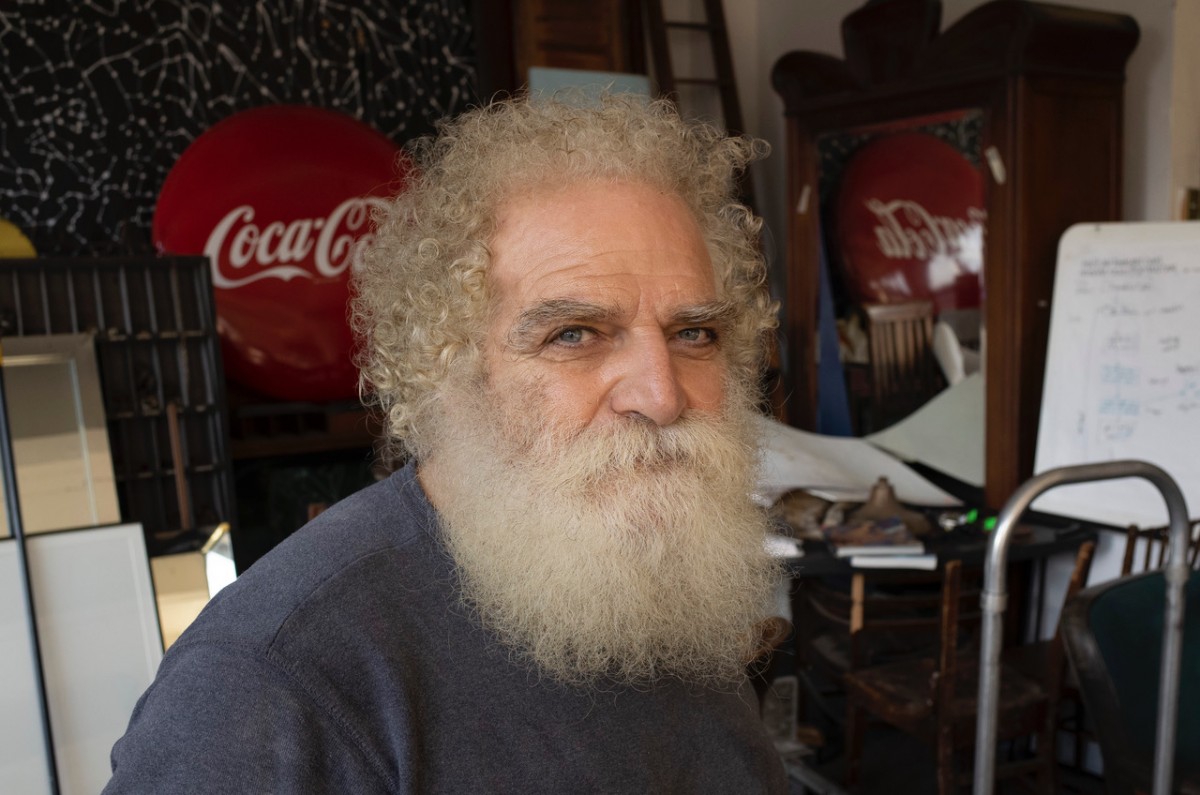
A little over 10 years ago I sat in his beat up old truck as we drove from his Atlantic Ave building back to 33 Flatbush. He pointed out the old marine merchant shops of Atlantic Ave where his father worked and he played as a kid. I asked how he was doing and, although he sure acted his happy old self with the big Santa Claus beard, he said he was worried. He knew his health and, generally, how many years he had in him. I remember it so clearly because of the closeness inside a truck cab, and how rarely somebody speaks to you about their own death. I listened but didn’t really know how to respond. He was worried about how he was going to leave his legacy and his properties to others that could continue on his path to a better, more fulfilling and sustainable planet. He said he really didn’t want the property sold to a developer. He wanted it to support creativity and protect the earth.

I don’t know what will come of all the items and places Al Attara left behind. But the countless wonderful people and memories he left in his wake should leave him no doubt that his life was one worth living.
breaking down barriers

R0010962-1.JPG R0013581-0.jpg

One of my first experiences with the magic of Al happened in 2008 after a floor meeting at MEx, the collective of architects and urban designers on the 6th floor of 33 Flatbush. At the meeting, people agreed that one of the walls in our space was in the way and should be removed. We decided to start a conversation with Al to see if he was open to the idea.

Al happened to walk by toward the end of the meeting. This seemed to happen a lot. He was always curious about what people were working on, talking about, thinking about. We asked him about removing the wall. He said “Sure, no problem.” A few minutes later he comes back with a gasoline powered saw, and in a few minutes after that, the wall was in pieces, ready to be carried away.

Al and his space were so supportive and so flexible that it made 33 Flatbush feel like a place where anything was possible. Over and over again, Al would rearrange his stuff and his space to make room for the latest kinetic sculpture, fish farm or science lab that somebody wanted to build.

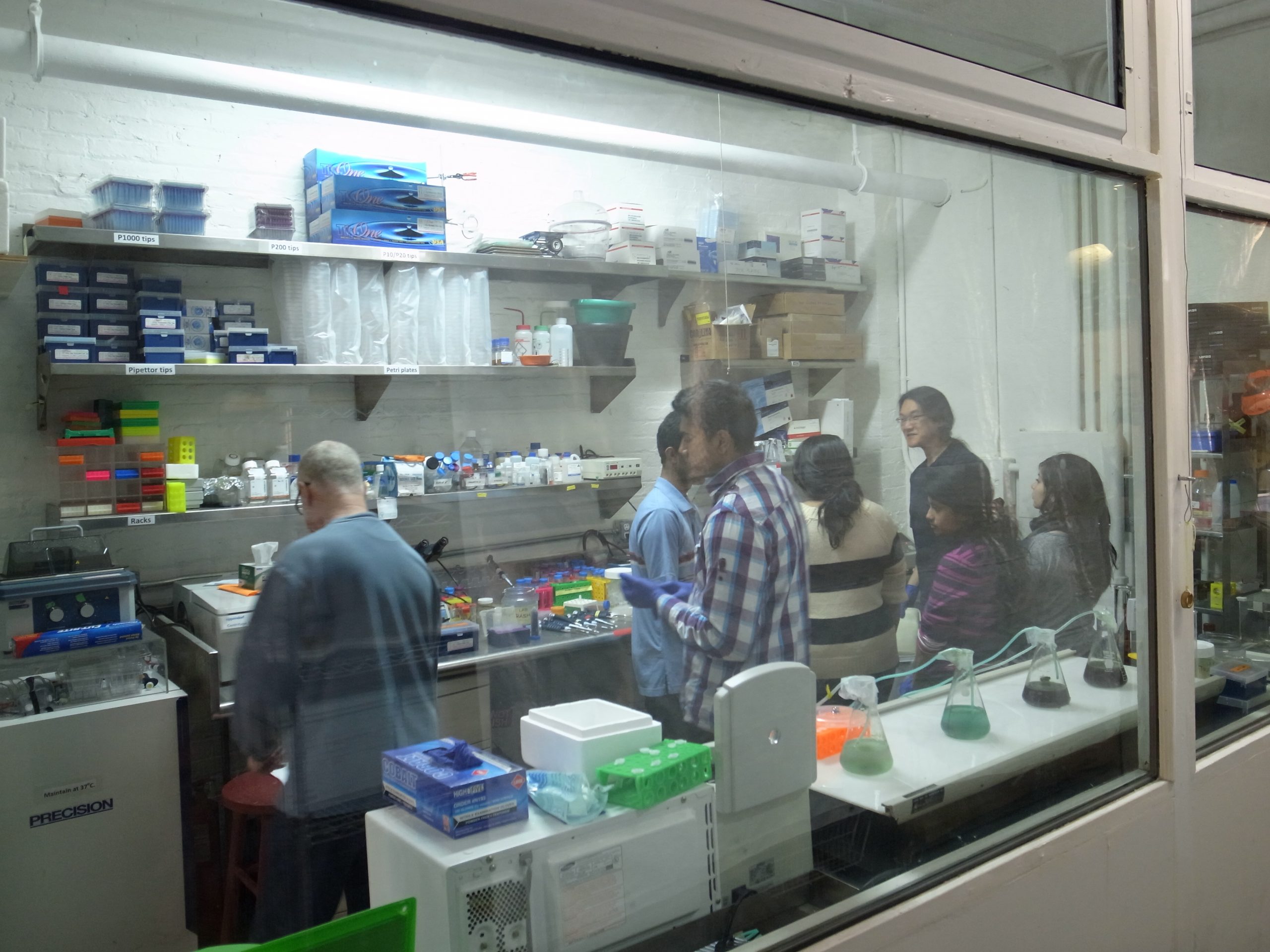
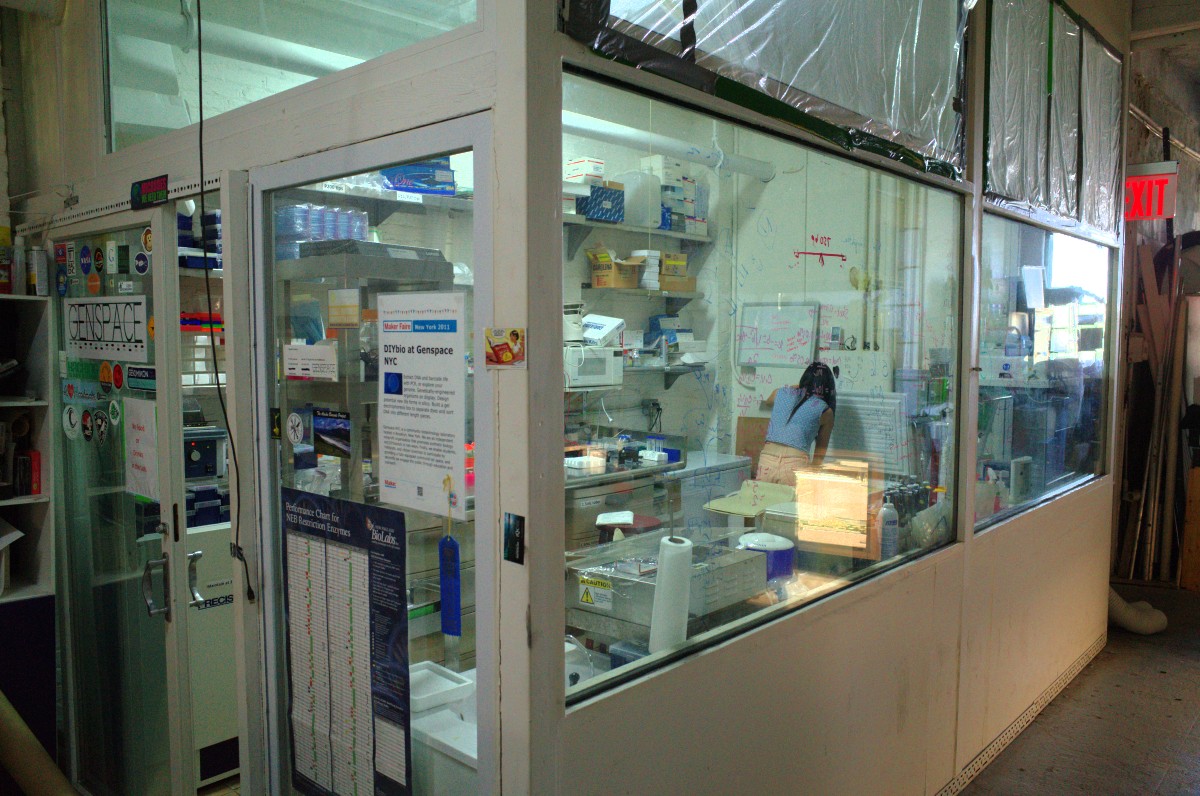
The photo is of Genspace, the first DIYbio lab in the United States, on the 7th floor.

High Valley connection

Al-Attara-Sky-Pod-0.JPG Al-Attara-Greenhouse-Arc-1.png Al-Attara-Happy-New-Year-2017-2.JPG

I met Al when he purchased High Valley in Dutchess County in 2014. While I grew up in Queens & Long Island, and lived a number of years in Binghamton, my home since 20004 is a mile from High Valley. I knew the prior owners, was part of many celebrations and events there (including my first community theater performance), and was thrilled to have Al as the new steward of a special, sacred space.

He called me “Ronnie” to distinguish me from the “Bad Ron” who he struggled with until he finally was able to purchase the rest of the property. In return, I called him “Albie”, a nick name I’ve had for Albert Einstein ever since I sat on “Albie’s lap” in the small secluded park in Washington DC (across the street from the memorials). Al loved the nickname – anything, he said, besides the hated “Alfred E Newman” that had been his nemesis nickname growing up.

We shared some fascinating conversations about life, his biotech incubator visions for High Valley and Brooklyn – and I even got to visit the Brooklyn space when he was in the midst of dealing with the elevator and the other renovations / additions (did those ever get done?).

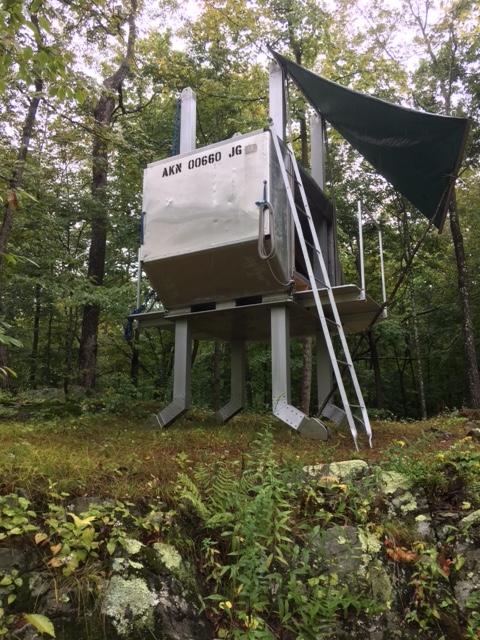
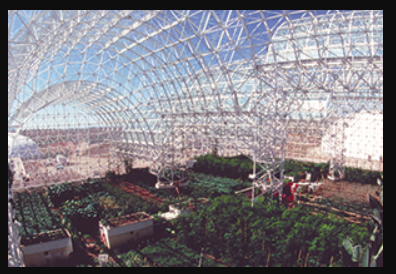
I was amazed by his concept of the Sky Pod mobile living spaces in 2017/2018. Are they still there? Does anyone live in them in the summers?

I invited him and had the pleasure of meeting Bea at a breakthrough CBD / THC event in NYC, and was fascinated by his correspondence with Bill M about needing a “Big Boat” (a “Greenhouse Ark”) for the water world that would be the end result of the melting polar ice.

He was a special soul whose spirit continues – in you, his family and friends, and in his continued exploration of the next phase of the “Great Mystery”.

Enjoy this next journey, Albie. We miss you – but look forward to having you greet us when our time arrives…

A Trip Upstate

IMG_20150426_132038.jpg

Al asked me to help him bring a load of impossibly random objects upstate. I didn’t have much time. But what could possibly go wrong?

I spent the morning assisting in Al-cheology — digging through the building for heavy and ancient things he had hunted at Sotheby’s auctions or gathered from the world’s heaving seas of happenstance. Al was very much the boss, telling me exactly where to push or lift or twist to wrestle and shift midcentury furniture, rusting iron beams, mysterious old crates, clawfoot bathtubs filled with old phone books from the 80s. If you have done this with him, you know. Where to place your foot. How to get a grip on a slippery corner. Soon I was filthier than I’ve ever been.

All of these misplaced treasures got hoisted into a bent and glowering box truck., one of Al’s army of orphaned machines. They all had backstories. He won a horse in a bet but didn’t want the horse. A friend of a friend ghosted after a misunderstanding but left the truck behind. I don’t remember any of the stories but the important part is that so many of them sounded like Al lived in song.

We hadn’t even made it out of town when the back left wheel started smoking. Al waved it off with the twinkling eye he used when he wanted to convince you that some scheme was completely reasonable. He said it’s just the brakes. The brakes have locked up in back. That’s okay; the front brakes work fine. You only need one set. At a long light, I jumped out, peered behind the smoking wheel, and saw metal faintly glowing with dull, red heat. But we were on a mission. The way out is through. As Virgil said to Dante.

The police pulled us over a few blocks later. The license plate was missing. Or expired. Or homemade. I don’t recall. But the truck was in a highly illegal state. Al told them he was just trying to get the truck off the street and leave it on his own property. The police separated us to get our stories. My side was easy. I knew nothing about the truck and its history. I told the officer instead about Al. About how he was this wondrous social node who knows every epically storied big personality from old school Brooklyn. I told the officer about Al’s generosity and vision and how it creates a community of scientists, artists, architects, designers, engineers, and people bringing big ideas to life. Special, valuable, and unique in all of New York. I joked with him about Al’s compulsion to acquire every underappreciated thing. And how it took me years to understand that he also collected us.

The two officers conferred animatedly, with smiles, before waving us into the truck. Driving away, Al told me that the officer had let him go because of his name. “My dad’s name was Alfred. He was a good guy. You seem like a good guy. You can go”.

It wasn’t just that Al lived partly in a song. It’s that the song extended beyond him. Friends, objects, even police officers got wrapped up in the edges of it.

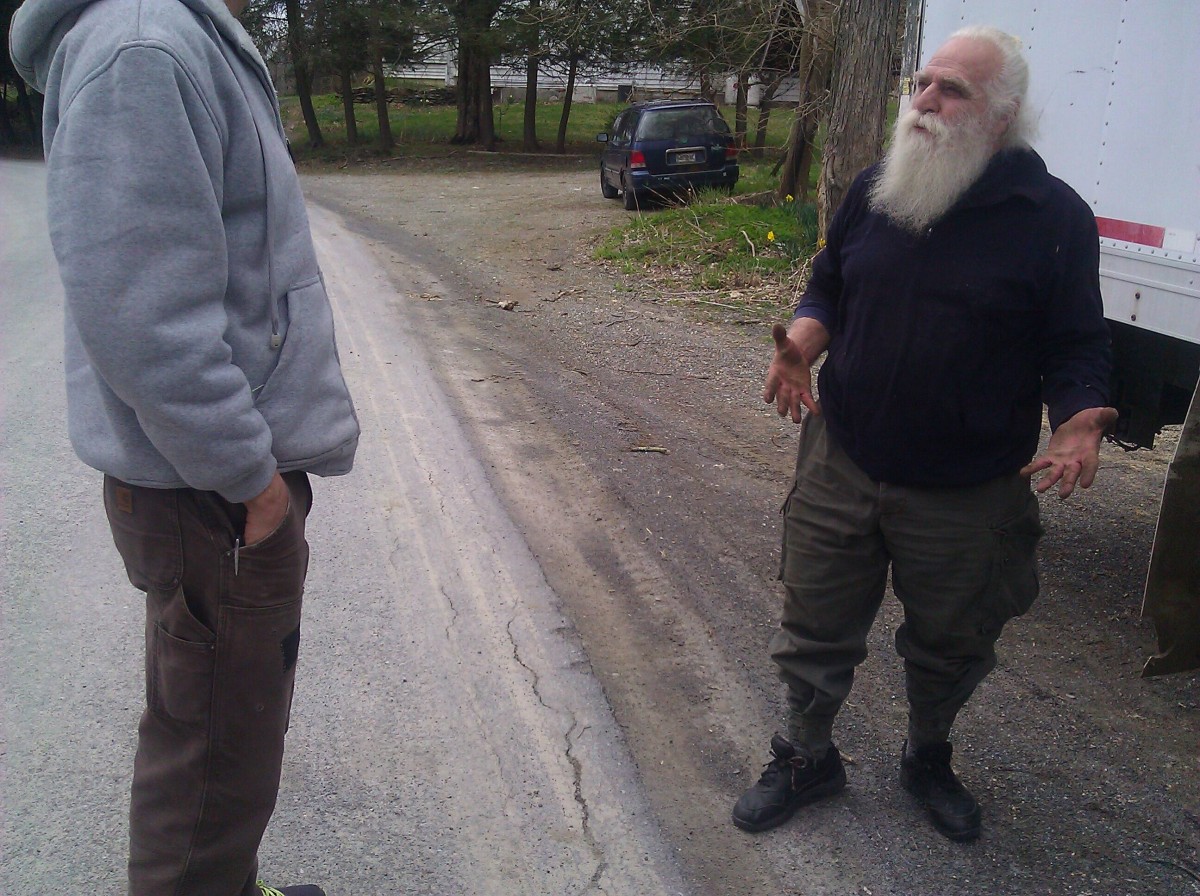
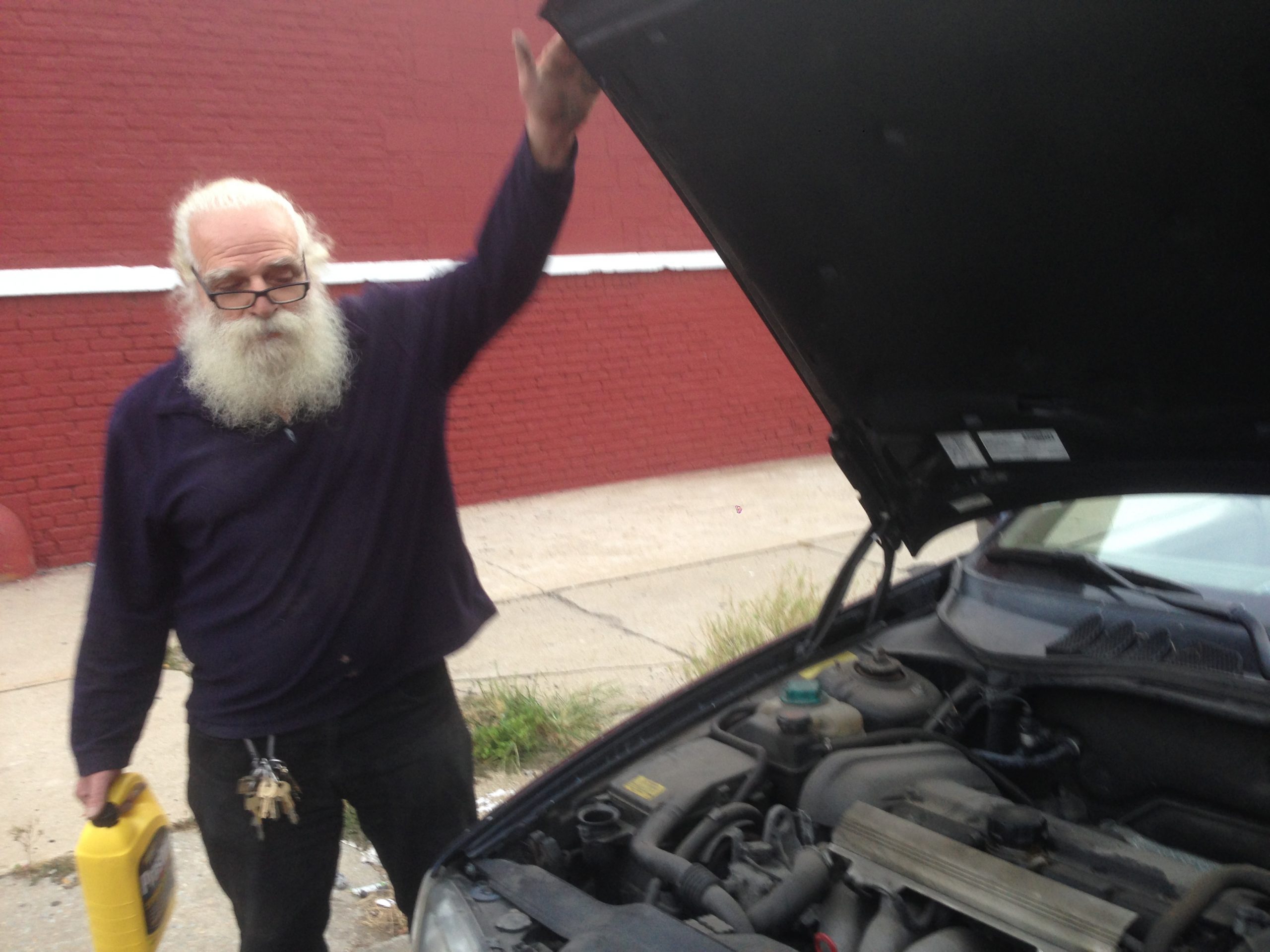
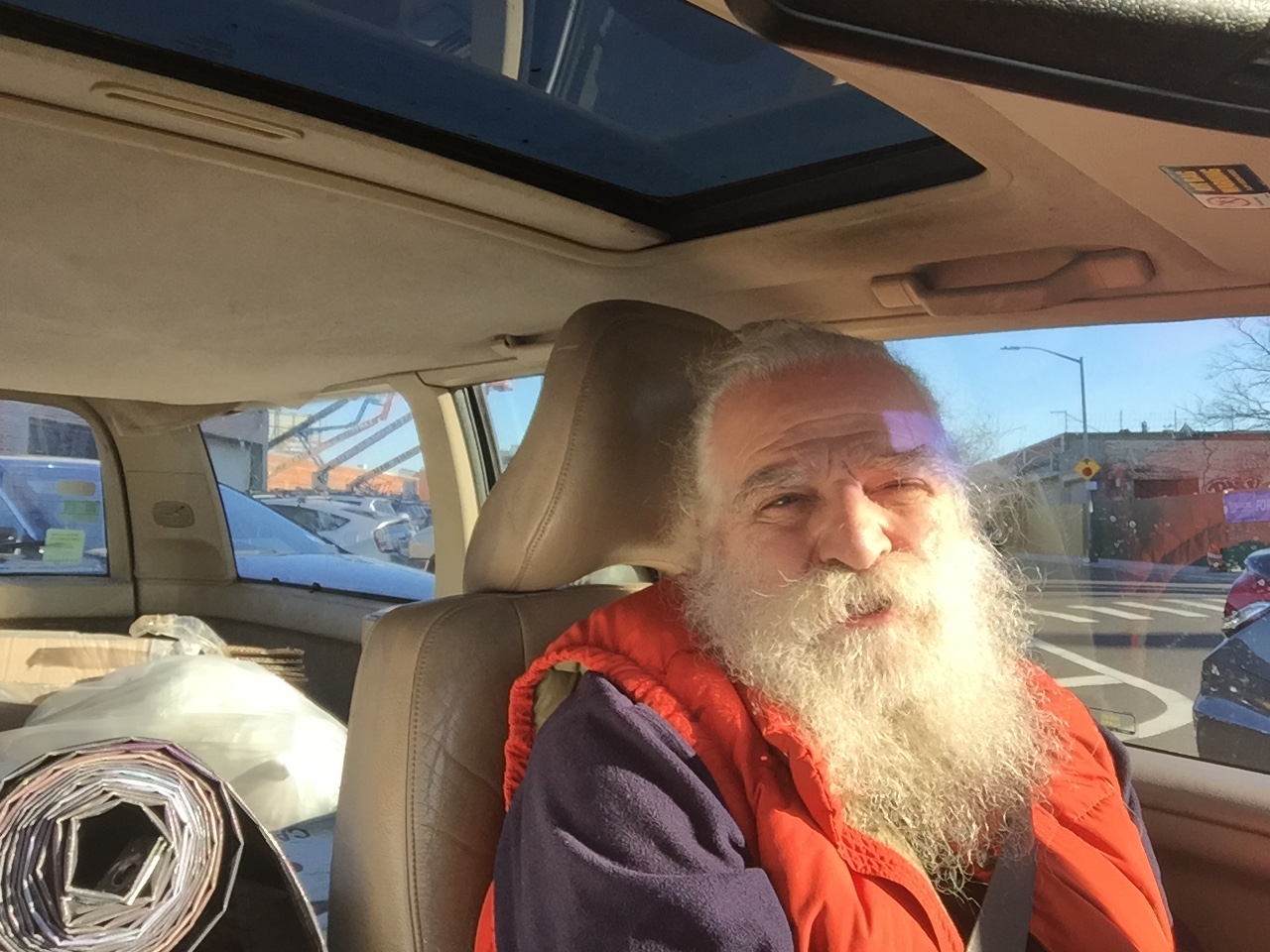
This photo is from later that day. And this is exactly how Al looked while convincing the officer that the best course of action is to let him drive two hours north in a smoking vehicle with illegal plates.

Al upstate

IMG_3970-1.JPG IMG_3968-0.JPG

Shared over email by Oliver Medvedik:

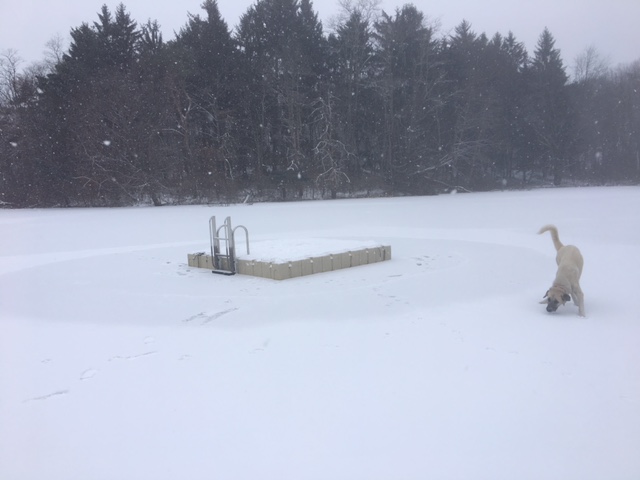
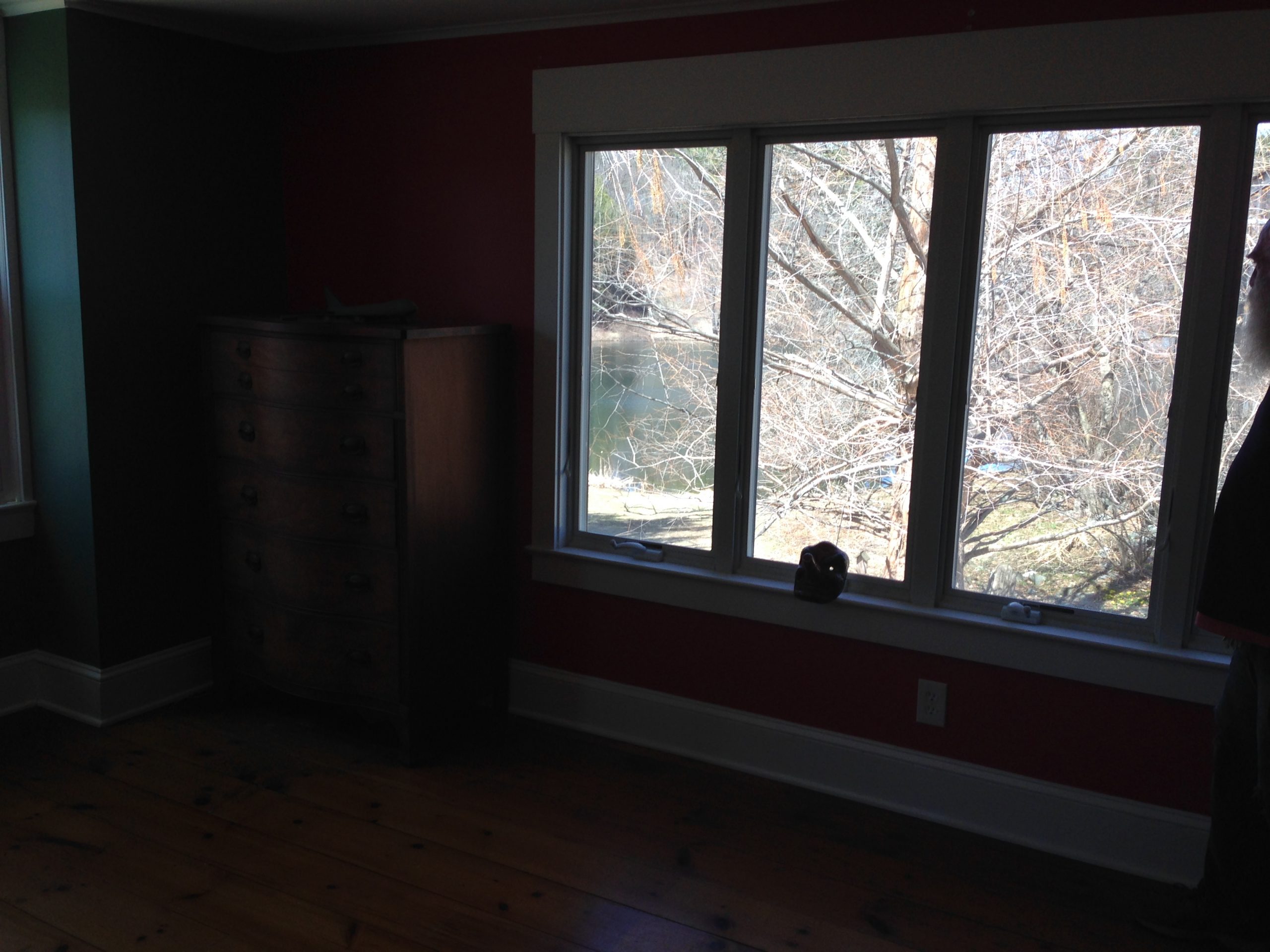
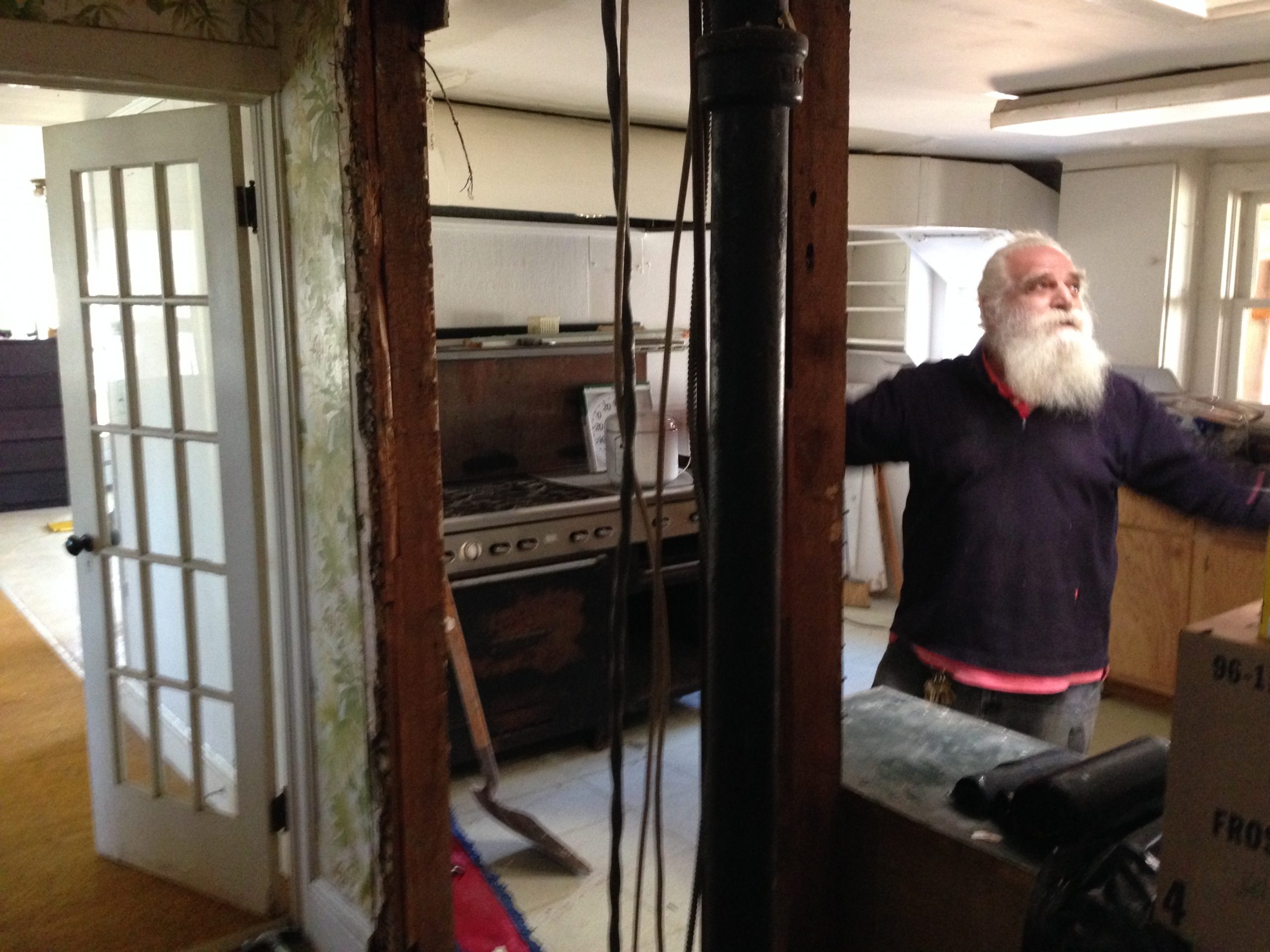
Al is one of those rare humans that I felt truly blessed to have crossed paths with in this life. I have only two close up photos of him that I took when I went to see him at his upstate compound. One I almost missed because usually Al will be so front and center in any photo. It’s him looking out at the pond outside his window. You can just barely see his profile on the right. I’d like to think that he’s always there peeking over my shoulder, curious to what what I’m working on.

A video of Al